Literary Pilgrimages
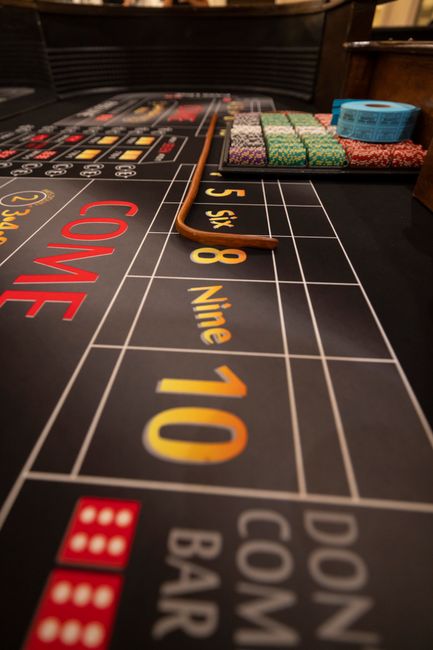
Every gambler eventually asks the same question: can I actually win long-term? The honest answer is uncomfortable, because it depends entirely on which game you sit down at. A slot machine and a poker table might live under the same casino roof, but they operate on opposite ends of the mathematical universe. One is designed to bleed you slowly with perfect predictability. The other rewards skill so much that professionals make a living from it. Understanding that gap is the difference between being a customer and being a competitor.
The house edge is the percentage of every dollar wagered that the casino expects to keep over time. It's not a fee you pay upfront. It's baked into the odds of every bet, quietly grinding away at your bankroll. For a closer look, UK88 has helpful details.
Here's how wide the spread is across common games:
That 0.5% versus 8% divide is the whole story. Play 500 hands of blackjack at $10 a hand and you're cycling $5,000 through the table, with an expected loss around $25. Play a slot with an 8% edge and the same $5,000 in spins will cost you roughly $400 on average. Same money wagered, wildly different outcome. The lesson isn't that slots are rigged. They're just built with a much steeper tax.
Slots get a bad reputation partly because players misunderstand what they're looking at. Modern video slots use a random number generator that decides the outcome of every spin the instant you press the button. Near misses, where two reels land on the jackpot symbol and the third just misses, are pure noise. They aren't building tension toward a payout.
Two other factors mess with players' heads: You can read more about it on UK 88.
None of this means slots are pointless. They're cheap entertainment with huge upside variance. Just don't confuse a 4,000x win possibility with a strategy. If you're going to spin, choose high-RTP titles (96% and up), set a hard session budget, and treat every dollar as spent the moment it leaves your account.
Poker isn't you against the house. It's you against other players, with the casino taking a rake, usually 5% of the pot up to a cap. That single structural difference unlocks everything.
In a $1/$2 no-limit hold'em game, the rake might be $5 per pot. At a full table, that's a serious drag, but it's a fixed cost the winning players absorb and move past. The key point is that your edge comes from opponents' mistakes: calling too much, bluffing too rarely, overvaluing top pair. Unlike slots, these errors are predictable and exploitable.
What separates profitable players from break-even ones:
The best part? Poker edges compound. A player beating $1/$2 for $15 an hour can learn, move to $2/$5, and triple that hourly. No slot machine in the world offers that kind of skill-based growth.
Sportsbooks want action on both sides, and their business model depends on setting lines that balance the money while guaranteeing a profit through the vig (usually -110 on each side, meaning you risk $110 to win $100). For sharp bettors, that commission is a hurdle, not a wall.
Line shopping is the easiest edge available. Odds vary between books by two, three, sometimes five percentage points on the same game. Betting the best price on every wager can swing your long-term results from losing to winning without changing anything else about your process.
Other habits that separate winners from donors:
The gambling industry doesn't hide its math. It publishes RTP figures, rake structures, and odds tables. The problem is that most players never look. They walk past the numbers and into the lights.
If your goal is entertainment, know the price. Pick the games with the lowest edge, set a loss limit before you start, and never chase. If your goal is profit, accept that only skill-based formats like poker, advantage play, and disciplined sports betting offer a realistic path. Slots and keno will almost always separate you from your money over enough spins.
Understanding the house edge won't make you lucky. It will make you clear-eyed. And in a world full of flashing lights designed to blur your judgment, clarity is the most valuable edge you can carry through the door.
