Literary Pilgrimages
The first thing you learn on the Eastern Shore of Maryland is that the oyster is not a food. It is a calendar, a livelihood, a history, a way of arguing about the future. Ask anyone in a watermen's town what time it is and they may tell you by the tide, by the season, by whether the skipjacks are working the beds or tied up for the winter. The oyster is the clock, and it has been ticking here for centuries.
I drove down from Annapolis on a bright October morning, crossing the Bay Bridge and then heading south through fields of soybeans and corn, past farm stands and Baptist churches, until the land began to fray into creeks and coves. In St. Michaels, I stopped at a waterfront dock where a few workboats were tied up, their decks littered with culling boards and bushel baskets. An older man in waders was hosing down his boat, and he nodded when I asked if the season was good. "Good enough," he said. "The oysters are coming back. Slow, but coming."
The skipjack is the last working sailboat in North America, and there are only a handful left on the Bay. They are beautiful, low and rake-masted, designed to drag for oysters under sail because powerboats were once banned from the fishery. I saw one under way near Tilghman Island, its dredges working the bottom, its crew in oilskins. It moved with a kind of quiet purpose that no engine can imitate.
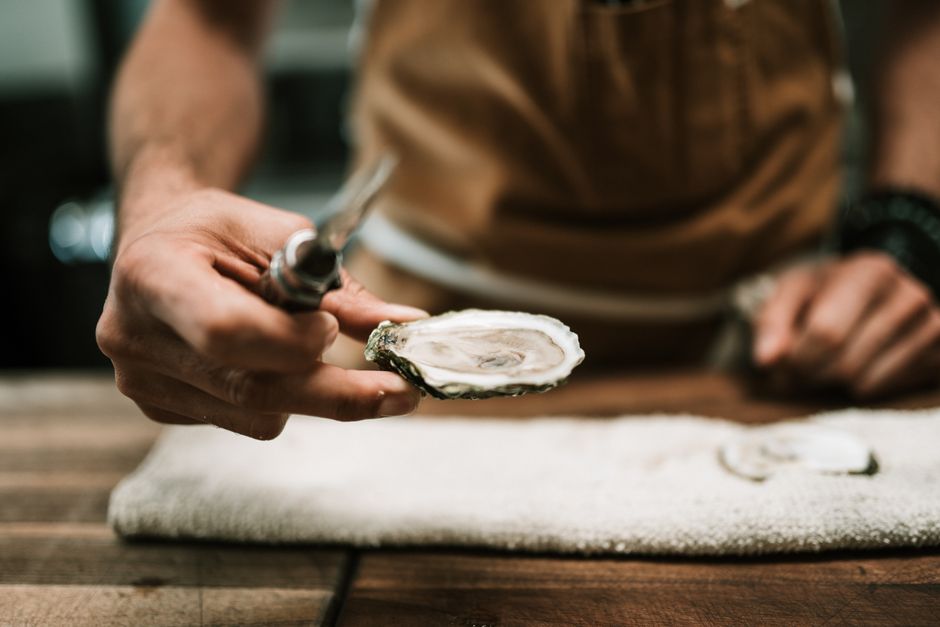
Later, I visited a shucking house on Hooper's Island, a long, low building that smelled of salt and shell. Inside, men and women stood at wooden tables, their hands moving faster than the eye could follow, prying open oyster after oyster and dropping the meat into gallon cans. They wore gloves, and their knives were worn to the shape of their grip. One woman, who had been shucking for thirty years, told me she could do a bushel in under an hour. I believed her.
The shucking house is not a romantic place. It is cold in winter, hot in summer, and the work is hard on the hands and the back. But it is also a place where people know each other, where the same families have worked for generations, where a young man can learn a trade that will feed him if he is willing to get up before dawn.
The Chesapeake has been fished for oysters since before the English arrived. The Powhatan and the Nanticoke harvested them from the shallows, leaving behind mounds of shell that archaeologists still study. In the nineteenth century, the Bay supplied oysters to cities up and down the East Coast, and the watermen grew rich — or rich enough. Then came overharvesting, disease, pollution, and a long decline that nearly ended the fishery altogether.
Today, there are signs of recovery. Restoration projects are rebuilding reefs, and newer, disease-resistant oysters are being planted. The watermen I met were cautious but not hopeless. "We've seen bad times before," one said. "We're still here."
I ended my trip at a small restaurant on the Choptank River, where I ate a dozen oysters on the half shell, each one briny and cold and tasting of the Bay. The sun was going down, and the water was turning the color of pewter. A workboat went past, heading home. The oyster is still the clock, and it is still ticking.
