Maritime Culture
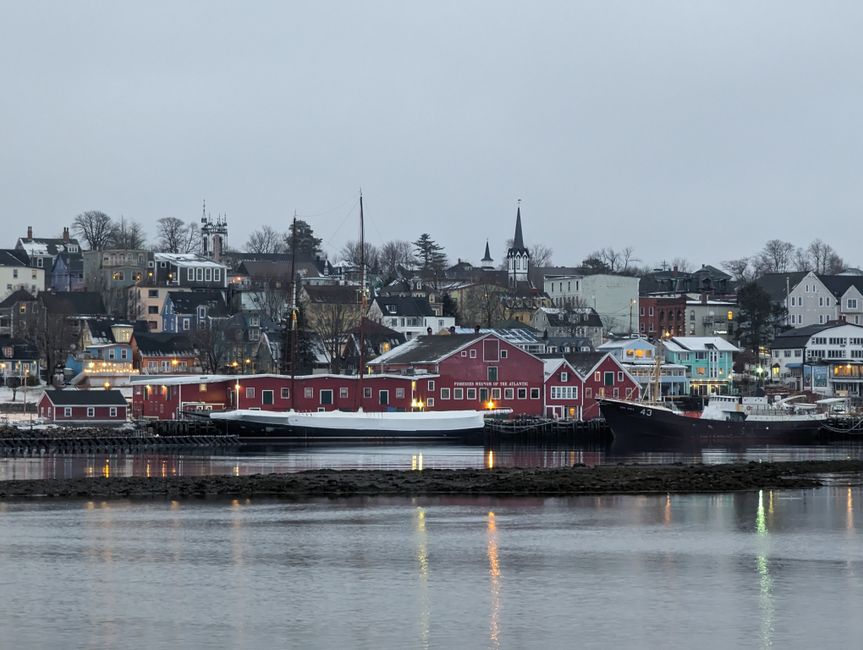
The first thing you notice about Lunenburg in February is the quiet. Not silence exactly — there's still the slap of halyards against masts, the low diesel hum of a dragger heading out before dawn — but a kind of hush that settles over the waterfront like frost on a piling. The brightly painted houses that crowd the hillside in every postcard are still there, of course, red and yellow and blue against the gray Atlantic sky. But without the tour buses and the ice cream queues, the town feels like what it has always been underneath: a working harbor that happens to be beautiful.
I walked the length of Bluenose Drive on a morning when the temperature hovered just above freezing. A few men in orange bibs were coiling rope on the deck of a scallop boat, their breath visible, their conversation carrying across the water in fragments. Nobody was in a hurry. In winter, the harbor keeps its own clock, and it is a slow one.
Lunenburg's old town is a UNESCO World Heritage Site, and the designation is deserved, but what struck me most was how un-museum-like it feels. The houses are lived in. The churches still hold services. The smell of salt and diesel and fresh bread from a bakery on Lincoln Street mingles in a way that no curated exhibit could replicate. This is a town that has been fishing the Grand Banks and the near shore for nearly three centuries, and the architecture reflects it — steep roofs to shed snow, wide eaves to shelter from rain, windows placed to watch the harbor.
I stopped at a small café near the Fisheries Museum and ordered coffee from a woman who told me her grandfather had captained a schooner out of this very wharf. She pointed to a photograph on the wall, faded but clear: a two-masted vessel, men in oilskins, the same gray sky. "That's the last one we built here," she said. "Everything since has been steel, and everything since has been from somewhere else." There was no bitterness in her voice, only the flat acceptance of someone who has watched the world change and kept making coffee anyway.
Travel writing often chases the peak season — the festivals, the tall ships, the perfect light of July. But coastal towns are most honest in the off months, when the visitors are gone and the people who remain are the ones who never left. In Lunenburg, that honesty looks like a fisherman mending a net on his porch in the cold, a librarian shelving books about the age of sail, a teenager walking a dog past a memorial to men lost at sea.
I stayed three days. I ate fish cakes at a diner where the waitress called me "dear" and meant it. I watched the ferry to Dartmouth come and go, nearly empty. I stood on the wharf at dusk and listened to the water working against the pilings, the same sound that has been heard here since the first shallop was hauled ashore.
If you go — and you should — bring a warm coat and no itinerary. The harbor will tell you what it wants you to know. It always has.
