Coastal Landscapes
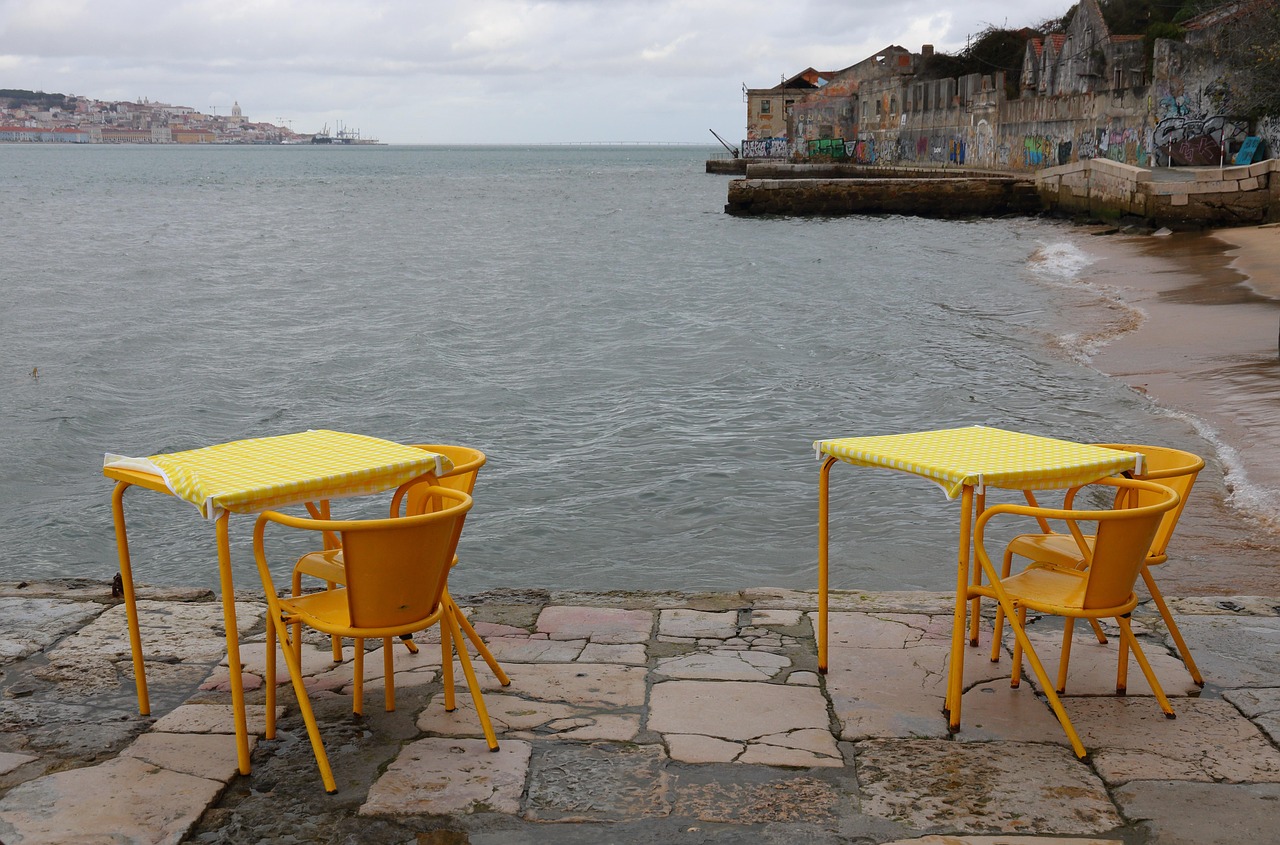
Lisbon is a city that has always looked outward. From the miradouros on its hills, you can see the Tagus widening toward the Atlantic, and on a clear day you can almost feel the pull of the sea. For centuries, this was the last European port before the unknown, the place where ships left for Brazil and India and the Azores, and where they returned, if they returned, with spices and gold and stories. The writers came too, drawn by the light and the melancholy and the sense that here, at the edge of the continent, anything might happen.
I began my walk at the Praça do Comércio, the great square that opens onto the river. It was rebuilt after the earthquake of 1755, and it still feels like a statement: order imposed on chaos, stone against water. I crossed the square and headed toward the Alfama, the old Moorish quarter that climbs the hill above the port. The streets are narrow and steep, and the walls are covered in azulejos, and from time to time you catch a glimpse of the river between the buildings, blue and indifferent.
In the Chiado, on a busy corner, sits the Café A Brasileira, where Fernando Pessoa used to sit and drink coffee and write. There is a bronze statue of him outside, seated at a table, and tourists line up to have their picture taken beside him. But inside, if you go early enough, you can still find a quiet corner and a bica and a pastel de nata, and you can imagine what it was like when the poet was alive, scribbling on scraps of paper, inventing the heteronyms that would make him famous after his death.
Pessoa wrote about Lisbon the way Joyce wrote about Dublin — not as a backdrop, but as a character. His city is a place of fog and longing, of offices and trams and the slow drift of the river. "The Tagus is a river that flows past my door," he wrote, and in that simple line there is everything: the nearness of the water, the ordinariness of it, the way it carries the world past without stopping.
I left the café and walked down to the Cais do Sodré, the old docklands that have been transformed into a nightlife district. It was morning, and the bars were closed, and the river was busy with ferries crossing to the south bank. A few fishermen were casting lines from the pier, and a man was selling roasted chestnuts from a cart. The smell of salt and smoke and coffee hung in the air.
What is it about harbors that makes them so fertile for writers? Partly it is the arrival of the unexpected — ships bring news, goods, people, ideas. Partly it is the departure, the possibility of leaving, which is the beginning of every story. And partly it is the water itself, which is both a boundary and a connection, a reminder that the world is larger than the land.
Lisbon has known all of this. It was the capital of an empire that stretched from Brazil to Macau, and it was also a city that watched its empire fade, that sent its young men to war in Africa, that lived through dictatorship and revolution and the slow, uncertain work of becoming a modern European capital. The writers who have lived here — Pessoa, Saramago, Lobo Antunes, Sophia de Mello Breyner — have all, in their different ways, written about the tension between the local and the global, the small life and the wide sea.
I ended my walk at the Torre de Belém, the old fortress that once guarded the entrance to the harbor. The tide was out, and the mudflats smelled of salt and decay. A few tourists were taking selfies, and a man was playing a guitar, and the river was doing what it has always done, flowing past the door of the city, carrying everything away.
